2026 Ultimate Guide to US Tip Culture: From Restaurant Etiquette to Confidently Saying ‘No Tip’ at Coffee Shops and To-Go Counters
The most nerve-wracking moment for anyone traveling or moving to the United States is undoubtedly when they face the bill at the register. Looking at the tip suggestions at the bottom of a receipt, or facing a credit card terminal turned toward you, can instantly spark confusion about exactly how much you are supposed to pay.
Particularly over the last few years, the US has seen a massive surge in what is now widely known as ‘Tipflation’—the practice of demanding tips even at venues with absolutely zero table service. This has triggered non-stop frustration and heavy debate even among born-and-raised locals. At Smartusshopper, we believe that this indiscriminate demand for tips heavily threatens the everyday consumer’s wallet. Drawing from my real-world daily experiences as an American living and spending here, I want to share a reliable, situational tipping guide along with practical tips on how to confidently decline tips at to-go establishments.
1. The Core Essence of US Tipping and the Basic Calculation Formula
In the United States, a tip is not just a polite ‘bonus for exceptionally good service.’ Many service workers in America—especially restaurant servers—are legally paid under a ‘Tipped Minimum Wage,’ which sits drastically lower than the standard federal minimum wage. In short, the tips paid by consumers directly build their liveable take-home income. Therefore, if you receive full sit-down service, paying an appropriate tip is a fundamental sign of respect for the local workforce.
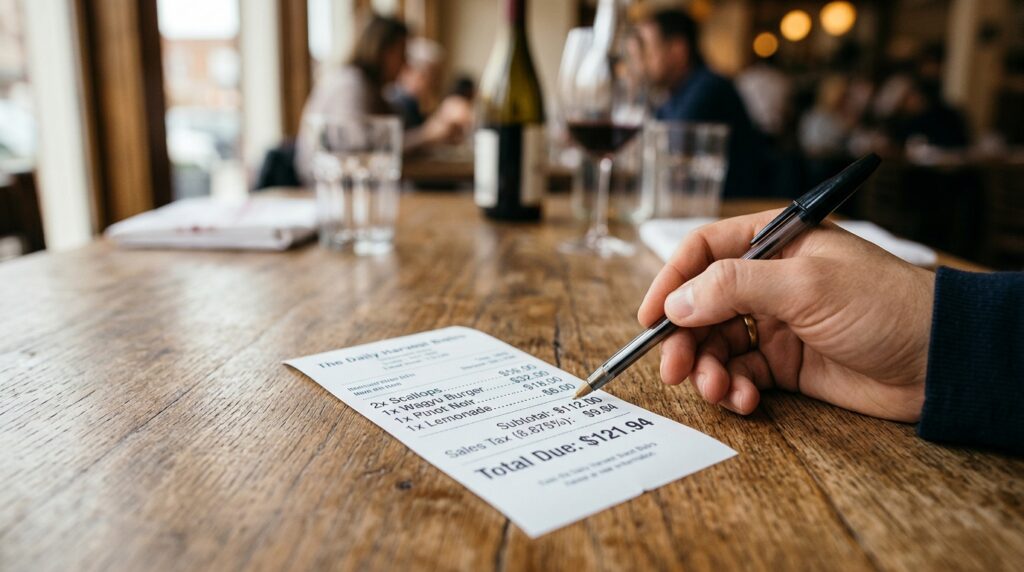
- The Crucial Standard for Calculation: Tips should always be calculated based on the Subtotal (the cost of food and drinks before sales tax is applied). If you calculate your tip percentage using the post-tax Total, you will end up double-tipping on the government tax. Always check your receipt carefully.
- A Fast and Easy Calculation Trick: In my experience, the quickest shortcut is to look directly at the Sales Tax amount listed on the receipt.In most US states, the sales tax hovers somewhere around 7% to 9%. Because of this, if you simply double the tax amount, you will automatically land on a perfectly respectable, stress-free tip of about 15% to 18%.
2. Standard Tipping Guidelines by Situation and Industry
To help you reference these benchmarks seamlessly while on the go, here is a structured summary of standard tipping percentages and amounts for typical daily situations.
| Venue / Situation | Recommended Tip | Real-World Advice & Notes |
|---|---|---|
| Sit-down Restaurants | Lunch: 15% ~ 18% Dinner: 18% ~ 22% | Standard dining where a server seats you, takes orders, and brings food. |
| Fine Dining Restaurants | 20% ~ 25%+ | Upscale venues with high-end service where dedicated staff monitor your table. |
| Taxis & Rideshares (Uber / Lyft) | 10% ~ 15% | Paid inside the app or to the driver upon a safe arrival; adjust up if they carry heavy bags. |
| Hotel Housekeeping | $2 ~ $5 per night | Leave cash neatly on the nightstand or pillow every morning before heading out. |
| Hotel Bellhops (Porters) | $1 ~ $2 per bag | Hand over cash directly to the porter right after they bring your luggage up to your room. |
3. Coffee Shops and To-Go Outlets: Is Tipping Truly Justified?
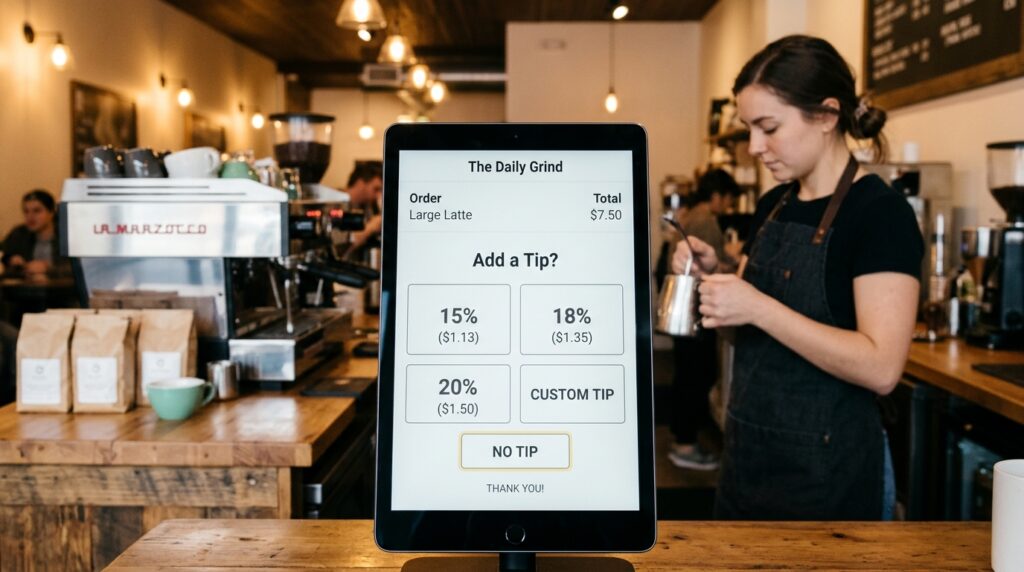
These days, there is a specific moment that causes intense social anxiety not just for foreign travelers, but for us locals as well. It happens right when you order a single cup of coffee at a counter or pick up a pre-ordered to-go meal. The cashier flips a digital screen facing right at you and says, “It’s just going to ask you a quick question on the screen.” Lo and behold, the screen displays giant buttons reading 15%, 18%, 20%, and No Tip. Under the heavy gaze of the employee and the pressure of a long line behind them, many feel forced to click a high percentage.
However, I completely disagree with this trend. I firmly believe that you should not feel obligated to tip at coffee shops or to-go counters.
Why To-Go Tipping is Unjustified and Its Heavy Economic Burden
- The Complete Absence of Service: Servers at traditional sit-down restaurants provide continuous physical labor over an extended period—they refill your water, track your requests, and clear away heavy dishes. On the flip side, an over-the-counter transaction or a to-go order involves nothing more than a quick swipe of a card and handing over a package. The cost of preparation and basic labor is already factored into the menu price; asking for more shifts the burden of base wages onto the customer’s shoulders.
- The Financial Strain on Low-Income Consumers: This constant, aggressive pushing for tips acts as a massive financial barrier for low-income families, students, and everyday working-class people. For someone just trying to grab a quick coffee or affordable fast food to get through their shift, adding an unearned 15% to 20% surcharge every single time is an unfair expectation. The modern digital payment interfaces are highly criticized for guilt-tripping consumers into feeling like terrible people just for wanting to pay the base price.
Smart Tactics for Handling Digital Register Screens
- When a tipping prompt pops up on a to-go screen, confidently hit [No Tip] or [0%] without a shred of guilt. In my experience, local Americans are increasingly choosing ‘No Tip’ at casual checkout counters to protect their own bank accounts. Cashiers process hundreds of transactions a day; they will not remember your face or compromise your food over a standard counter transaction.
- If a barista goes completely out of their way to craft a highly complex custom drink perfectly, or displays incredible hospitality, you can select [Custom Tip]and manually type in a small token amount, like loose change or a simple
$1, as a polite gesture.
4. Essential Tips to Prevent Accidentally Double-Paying
- Always Check for ‘Gratuity Included’ on the Bill: In heavily touristed areas (like Times Square in New York or South Beach in Miami), or when dining out with large parties (typically 6 or more people), restaurants will frequently add the tip automatically. Look closely at the itemized list for keywords like
Tip,Gratuity, orService Charge. If a dollar amount is already added there, do not write an additional tip on top of it. - Watch Out for the ‘Suggested Tip’ Trait: Many establishments print handy tip calculations at the very bottom of the receipt. Beware, as some sneaky businesses calculate these suggestions based on the post-tax Total rather than the pre-tax Subtotal to artificially inflate the numbers. It is always smarter to take a brief second and estimate the math yourself based on the subtotal.