
The Ultimate Financial Hack: Why Using US Mileage for South American Domestic Flights is Booming
When travelers embark on the journey of planning a dream vacation to South America, they almost exclusively focus their attention and financial planning on the long-haul transatlantic or transpacific flights required to bridge the physical distance between North America or Asia and the Southern Hemisphere. Major international aviation hubs such as Jorge Chávez International Airport in Lima, El Dorado International Airport in Bogotá, Guarulhos International Airport in São Paulo, and Ministro Pistarini International Airport in Buenos Aires serve as the logical, primary gateways for these massive expeditions. Securing a comfortable economy seat or a coveted business class product on these long stretches is undoubtedly a vital component of the itinerary. However, seasoned wanderers and astute financial minds quickly discover that the true logistical and financial headache does not lie in crossing the equator; rather, it manifests the very moment they land and attempt to navigate the internal aviation networks withinthe South American continent itself.
Booking domestic segments within a specific country or attempting to hop across regional borders between neighboring South American nations can be a shockingly prohibitive financial endeavor. Cash prices for these relatively short regional routes routinely reach staggering heights that catch international tourists completely off guard. Fortunately, individuals who reside in the United States and hold active access to the highly competitive US credit card ecosystems and robust airline loyalty programs possess a massive, hidden financial cheat code. In recent months, the practice of utilizing US airline frequent flyer miles to book intra-South American and domestic Latin American flights has exploded in popularity among elite travel hackers and smart shoppers alike. This sophisticated financial strategy successfully converts what would otherwise be an astronomically expensive series of regional flights into seamlessly integrated, nearly free travel segments, requiring only a modest handful of miles and a few literal dollars in government security taxes.
1. The Hidden Reality of the Latin American Aviation Market
To comprehensively evaluate why this specific mileage trend is experiencing such an aggressive surge in popularity, one must critically analyze the economic realities and current structures defining cash airfare within Latin America. Unlike the domestic aviation landscapes of Western Europe or North America, where a fierce and unrelenting proliferation of ultra-low-cost carriers (ULCCs) consistently forces legacy airlines to drive down their baseline prices, the South American aviation sector remains highly consolidated, strictly regulated, and structurally insulated from hyper-competition.
Major domestic networks across industrial powerhouses like Brazil, Chile, Colombia, and Peru are dominated by a select few massive corporate airline groups. This institutional lack of diverse market competition, combined with fluctuating local currencies, steep infrastructure taxes, and steadily rising regional jet fuel costs, has resulted in a market where regional airfare consistently climbs at an aggressive rate year over year.
Consequently, a simple, routine one-hour domestic flight from the coastal city of Lima to the high-altitude mountain valley of Cusco—which serves as the mandatory geographical gateway for anyone wishing to witness the ancient wonder of Machu Picchu—can effortlessly command several hundred dollars in cold cash during the peak dry tourist seasons. Similarly, securing a seat from Buenos Aires down to the breathtaking, wind-swept glacial expanses of Argentine Patagonia can instantly drain a traveler’s budget. For any dynamic traveler intent on exploring multiple diverse ecosystems within a single vacation, these mandatory internal flights will rapidly compound, frequently doubling or even tripling the aggregate monetary cost of the entire international holiday.
2. The Power of Fixed Redemption Value and Airline Alliances
This exact economic pain point is precisely where strategic US airline mileage redemptions step in to establish an entirely unmatched financial advantage. While cash airfare in South America behaves erratically, fluctuating wildly based on extreme seasonality, local political changes, and immediate consumer demand, the award ticket redemption charts managed by premium US airline loyalty programs remain remarkably stable, highly predictable, and incredibly generous toward regional travel within the South American zone.
By masterfully capitalizing on institutional global airline alliances such as Star Alliance and SkyTeam, alongside highly specialized independent codeshare agreements, consumers can maximize the utility of flexible US credit card points. This allows them to extract an exceptionally high cent-per-point (CPP) valuation on short-haul and mid-range regional routes that would normally bankrupt a cash-paying passenger.
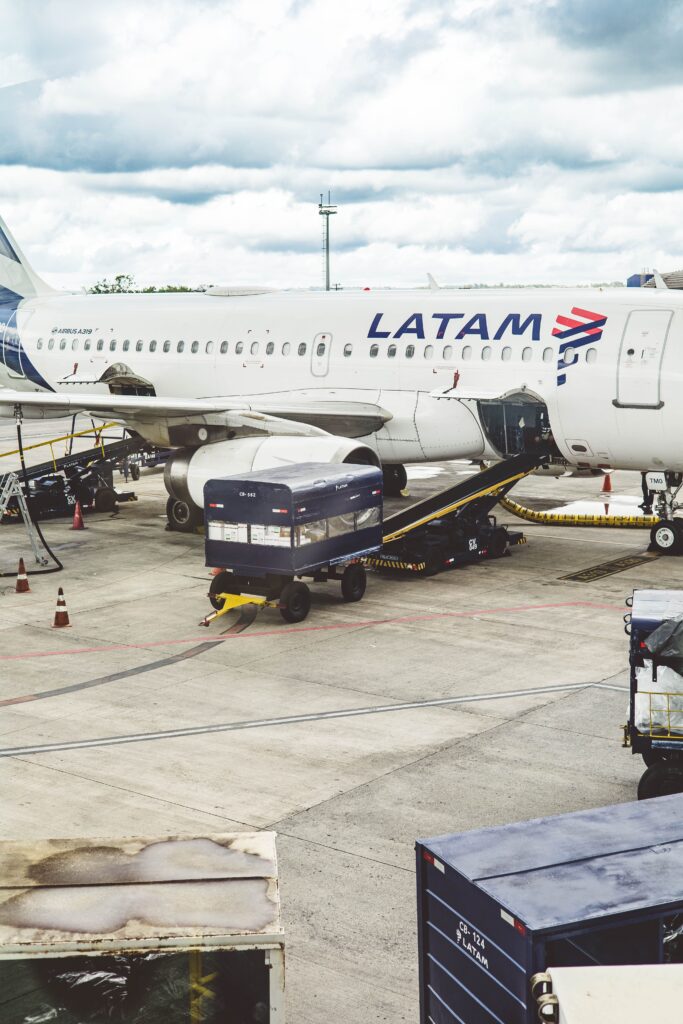
The undisputed champion and single biggest catalyst driving this modern travel trend is the deeply entrenched partnership between specific US legacy frequent flyer programs and LATAM Airlines Group, which stands proudly as the largest, most comprehensive airline network operating across the entirety of South America. Although LATAM officially made the corporate decision to exit the formal Oneworld alliance several years ago, it strategically maintained and subsequently fortified powerful, independent mileage partnerships with select North American legacy carriers, most notably Alaska Airlines and American Airlines.
For example, the Alaska Airlines Mileage Plan currently hosts what is widely considered the ultimate hidden “sweet spot” in the entire award travel industry. Under their beautifully structured distance-based partner award chart, a smart traveler can easily book short-haul domestic flights within the borders of Peru, Chile, Colombia, or Brazil operating directly on high-quality LATAM Airlines aircraft starting at an astonishingly low baseline of just 4,500 miles for a one-way economy ticket. Instead of handing over $200 to $300 in cash for a last-minute flight out to remote regional destinations, an educated consumer can simply redeem a negligible fraction of their points balance and settle a meager bill of less than $10 to satisfy federal government airport security fees.
3. Traversing the Continent with American Airlines and Avianca
For travelers whose ambitious itineraries demand longer distances that cross multiple international borders within the continent, the American Airlines AAdvantage program offers an equally compelling mechanism for cost elimination. American Airlines maintains a rock-solid, comprehensive redemption matrix with LATAM, utilizing zone-based routing rules that remain beautifully insulated from the predatory dynamic pricing models that plague modern cash tickets.
If your travel itinerary requires you to journey from the northern Caribbean coast of Colombia all the way down to the cosmopolitan streets of Santiago, Chile, booking a partner award through the American Airlines platform enables you to cross the entire length of the continent under a flat, predictable mileage rate. This completely shields your personal bank account from the astronomical cash prices traditionally levied on international border-crossing flights between sovereign South American nations.
Simultaneously, for travelers focused heavily on exploring the northern and western regions of South America, Avianca LifeMiles emerges as an indispensable financial tool. Because Avianca is an anchor member of the prestigious Star Alliance network, its proprietary loyalty currency, LifeMiles, operates with extreme flexibility. More importantly for US consumers, Avianca LifeMiles functions as a direct 1:1 transfer partner with major premium credit card ecosystems, including Chase Ultimate Rewards, American Express Membership Rewards, and Capital One Rewards.
This seamless integration allows savvy points collectors to instantly convert their everyday credit card spending into highly liquid aviation currency. LifeMiles frequently runs incredibly lucrative promotional periods where intra-regional flights within Colombia, Ecuador, and Central America can be unlocked for negligible mileage requirements, giving travelers the luxury of booking spontaneous excursions to coastal beach towns or colonial mountain cities without a second thought.

4. Unlocking the Gates to Remote Bucket-List Destinations
Beyond the undeniable raw mathematical savings on standard domestic routes, utilizing US frequent flyer miles serves as the exclusive key to unlocking access to legendary, ultra-remote bucket-list destinations that are otherwise completely out of reach for the average consumer due to predatory cash pricing. Exotic and historically isolated destinations such as Easter Island (Rapa Nui) positioned deep in the Pacific Ocean, the highly protected Galapagos Islands archipelago, or the deep, inaccessible recesses of the Amazon Rainforest are notoriously expensive to access via traditional currency.
Because airline networks like LATAM or Avianca hold near-monopolies over these highly specialized routes, they intentionally keep cash prices artificially high, knowing that passionate travelers have no alternative methods of transportation.
However, because these unique routes are operated as standard scheduled flights by major mainline carriers, corporate alliance agreements dictate that these airlines must open up a designated percentage of award seat availability to their international US partners. Consequently, an individual who has strategically accumulated a healthy balance of flexible reward points from everyday spending on cards like the Chase Sapphire Preferred® Card or the American Express® Gold Card can seamlessly and effortlessly fund their entire complex, multi-city intra-South American flight itinerary. By transforming points into high-value partner award tickets, the daunting financial barriers of Latin American travel completely evaporate. Stop allowing expensive regional airfare to dictate the boundaries of your geographical exploration. Master the elegant art of US mileage partner redemptions, optimize your credit card point transfers, and fully unlock the magnificent, boundless potential of your next grand South American adventure
This in-depth financial guide analyzes why using US airline mileage programs (Alaska Airlines, American Airlines, Avianca LifeMiles) to book internal and domestic flights within South America is experiencing an unprecedented boom among travel hackers. The article details how consumers can bypass the expensive, consolidated cash markets of Latin American aviation by utilizing 1:1 credit card point transfers from Chase and Amex. It highlights key sweet spots, such as booking domestic LATAM Airlines flights via Alaska Miles for as low as 4,500 miles, and provides a strategic blueprint for unlocking remote, high-cash bucket-list destinations like Patagonia, the Galapagos, and Easter Island for virtually free.