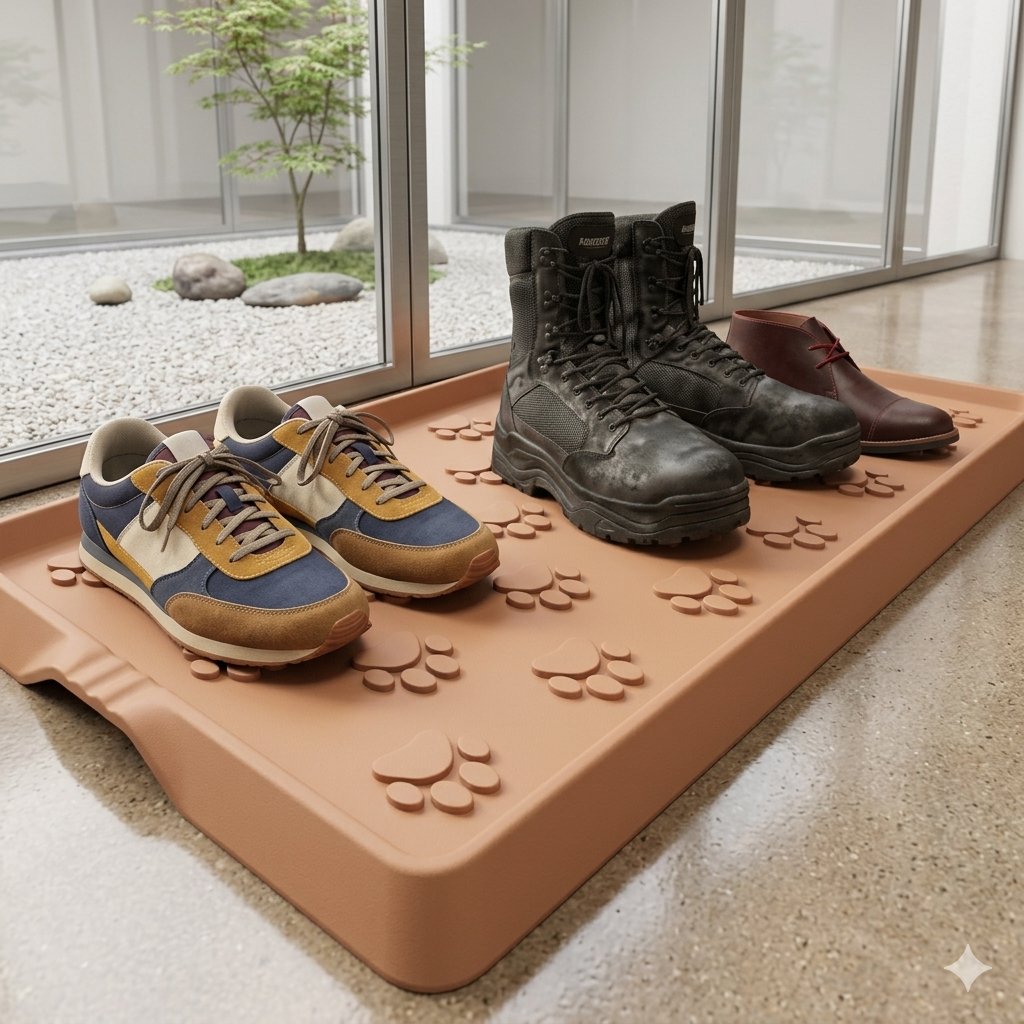
Why More Americans Are Banning Shoes Inside Their Homes
For decades, American pop culture exported a very specific image of domestic life. In sitcoms and Hollywood films, characters routinely walked straight from the street, through the front door, and hopped onto their beds or couches with their outdoor sneakers firmly on their feet. For global audiences—especially those in Asian, Middle Eastern, or Scandinavian cultures—this was a source of endless horror. Yet, even within the United States, this practice is rapidly turning into an outdated trope. Today, putting dirty shoes on clean bed sheets or even wearing them across the living room carpet is no longer viewed as a casual habit; instead, it is increasingly triggering the “ick” for millions of modern American homeowners.

The Roots of the Shod American Home
To understand why Americans kept their shoes on for so long, one must look at the historical evolution of Western domestic architecture and daily living habits. Unlike traditional Eastern homes that rely heavily on floor-sitting culture, thin futons, and integrated underfloor heating systems (such as the Korean ondol), Western homes have historically been built around furniture. Life happens elevated off the floor—on chairs, dining tables, raised bed frames, and deep sofas. Because a resident’s bare feet or clothing rarely made direct contact with the actual floorboards, the absolute necessity of maintaining a pristine, germ-free floor surface was culturally minimized.
Furthermore, interior design trends in the mid-to-late 20th century heavily favored wall-to-wall carpeting. Carpets were viewed as symbols of comfort, warmth, and luxury. However, once dirt, mud, and microscopic organisms get trapped deep within carpet fibers, vacuuming alone cannot fully eradicate them. Consequently, many Americans developed a mindset that the carpet was inherently “unclean” anyway, rendering the act of removing one’s shoes at the door seemingly redundant. This, combined with a cultural emphasis on personal autonomy and the social awkwardness of asking guests to expose their bare feet or socks, cemented the “shoes-on” policy as a standard trait of the American household.

The Great Shift: Hygiene, Science, and Hard Surfaces
However, contemporary data indicates a massive paradigm shift in American domestic behavior. Recent statistical surveys reveal that approximately 70% of Americans now prefer a shoes-off environment in their private residences [CBS]. Furthermore, an overwhelming 81% agree that abandoning footwear immediately makes a home look and feel cleaner [Bona]. What exactly has triggered this cultural revolution?
The primary catalyst is a heightened awareness of sanitation, supercharged by the global post-pandemic focus on domestic hygiene. Modern homeowners are increasingly scientifically literate regarding what hitches a ride on the soles of their footwear. Environmental microbiologists have published alarming studies demonstrating that the exterior of an average shoe can harbor hundreds of thousands of bacteria per square inch. Fecal coliforms, E. coli, Clostridium difficile, and dangerous environmental toxins like lawn pesticides, lead dust, and coal tar asphalt residue are routinely tracked into homes. For a household with toddlers or infants who spend their days crawling, playing, and dropping food directly onto the floor, a shoes-on policy presents a clear and immediate public health hazard.
Simultaneously, American architectural preferences have undergone a structural transformation. The era of the dusty wall-to-wall carpet is rapidly giving way to hard surfaces. Today, hard surfaces like authentic hardwood, engineered timber, and polished tile dominate contemporary home renovations. On a hard surface, dirt, pet dander, and street grime do not hide deep within fibers; they sit visibly on the surface, forming gray dust bunnies that drift across the room. Because dirt is now visible to the naked eye, the immediate visual consequence of wearing shoes indoors has forced homeowners to reconsider their habits.
The Etiquette Dilemma: Hosts vs. Guests
Despite the clear consensus on personal cleanliness, Americans still grapple with a unique cultural dilemma when it comes to hospitality. While nearly three-quarters of Americans maintain a strict shoes-off policy for themselves, less than half (around 44%) consistently require their guests to do the same [Bona].
This hesitation stems from deep-rooted Western notions of guest comfort. In American social contexts, an invitation to a dinner party or a formal gathering often implies that the guest’s outfit—including their choice of footwear—is part of their self-expression. Forcing a guest to remove tailored leather oxfords or high-heeled pumps can feel like stripping them of their confidence, leaving them vulnerable in mismatching socks or bare feet.
This social anxiety has birthed a massive cultural divide along generational lines. Older demographics remain highly reluctant to enforce shoe bans on visitors. According to historical polling data, only a tiny fraction of Americans over the age of 65 demand that guests strip off their shoes at the door [CBS]. Conversely, younger generations (Gen Z and Millennials aged 18 to 34) are taking a much harder line. Nearly half of younger adults actively enforce a universal shoe ban, viewing domestic hygiene as non-negotiable [Bona]. To bridge this social gap, many modern hosts have begun adopting international hospitality habits, providing a basket of brand-new, comfortable indoor slippers or house shoes right at the entryway for their visitors.
Conclusion: A New Era of Clean Living
The image of the shoe-wearing American lounging on a pristine sofa is officially a relic of the past. Driven by hard scientific data regarding bacterial transmission, a massive shift toward hardwood flooring, and the generational rise of younger homeowners who prioritize safety and wellness, the United States is rapidly aligning with global indoor customs. For modern Americans, the home is no longer just an extension of the busy, chaotic street outside; it is a sacred, protective sanctuary. Leaving one’s shoes at the front door has transformed from an eccentric foreign custom into an essential, universally recognized baseline of modern American living.