The World’s Ultimate Gastronomy: Top 10 Countries with the Most Delicious Food
Food is much more than mere sustenance; it is the living heartbeat of a nation’s culture, history, geography, and soul. Every time we taste a traditional dish, we are consuming centuries of agricultural adaptation, migration, colonial interactions, and familial love passed down through generations. For Americans, a nation built on a beautiful mosaic of immigrant culinary traditions, exploring global gastronomy is an ultimate passion. While taste is inherently subjective, major culinary authorities like Taste Atlas and global food critics analyze millions of expert reviews, diner ratings, ingredients, and historical techniques to determine which coteries truly reign supreme in the kitchen.
Whether you are an adventurous food lover planning your next big vacation or a curious home cook looking to expand your recipe book, this extensive guide explores the absolute pinnacle of global gastronomy. Here is the definitive deep dive into the top 10 countries with the most delicious food in the world, what makes their culinary philosophy unique, and the essential, life-changing dishes you must try.

1. Italy: The Global Monarch of Comfort, Simplicity, and Ingredient-Driven Perfection
When it comes to global culinary dominance, Italy stands entirely unrivaled. The core philosophy of Italian cuisine is a masterclass in elegant restraint. Unlike complex culinary traditions that rely on heavy, intricate reductions or dozens of masked ingredients, Italian cooking relies on the absolute purity of its raw components. Most iconic Italian dishes consist of fewer than five or six ingredients. However, those ingredients must be of the highest humanly possible quality: tomatoes sun-ripened on volcanic soil, extra virgin olive oil pressed from olives picked that very week, and cheeses aged meticulously for years.
Italian cuisine is fiercely regional. What Americans call “Italian food” is actually a collection of profoundly distinct regional traditions. In the northern regions like Emilia-Romagna and Piedmont, the food is rich, buttery, and deeply comforting, heavily featuring freshly rolled egg pastas, white truffles, Parmigiano-Reggiano, and Prosciutto di Parma. As you move south toward Campania and Sicily, the butter fades into golden rivers of olive oil, vibrant, sweet San Marzano tomatoes, fresh seafood, garlic, and wild herbs. Italian food feels like home to people all over the planet because it prioritizes emotional comfort and the joy of shared dining over superficial pretense.
- Essential Dishes to Experience:
- Pizza Napoletana: The absolute genesis of pizza. A true Neapolitan pizza must have a soft, charred, blistered crust baked in a wood-fired oven for a mere 90 seconds, topped exclusively with San Marzano tomatoes, fresh mozzarella di bufala, fragrant basil leaves, and a drizzle of premium olive oil.
- Cacio e Pepe: A Roman masterpiece that showcases the magic of Italian simplicity. It uses only three ingredients: high-quality spaghetti, sharp Pecorino Romano cheese, and freshly toasted black peppercorns, emulsified with starchy pasta water into a rich, creamy sauce.
- Risotto alla Milanese: A luxurious, slow-stirred northern classic featuring carnaroli rice cooked meticulously with rich broth, bone marrow, and infused with the earthy aroma and brilliant golden hue of saffron.

2. Greece: The Sun-Drenched Paradise of the Mediterranean Diet
Greek cuisine is a spectacular celebration of the sun, the sea, and the earth. For thousands of years, the Greek islands and mainland have perfected a culinary style that is simultaneously incredibly healthy and profoundly indulgent. It is the gold standard of the Mediterranean diet. Greek cooking relies on fresh, unpretentious ingredients plucked straight from the surrounding environment: wild mountain herbs like oregano and rosemary, dark Kalamata olives, fresh catches from the Aegean Sea, and grass-fed lamb.
The secret weapon of Greek culinary brilliance is olive oil, often referred to by ancient Greeks as “liquid gold.” It is used generously to cook, roast, and finish almost every single plate. Greek food also expertly balances rich, savory meats with acidic, bright flavors like freshly squeezed lemon juice, capers, and thick, tangy sheep’s milk yogurt. Eating in Greece is a highly communal, sensory affair—meze plates (small sharing appetizers) are spread across outdoor seaside tables, meant to be enjoyed slowly alongside a glass of ouzo or crisp Assyrtiko white wine.
- Essential Dishes to Experience:
- Moussaka: A legendary, comforting baked casserole layered perfectly with sliced eggplants, succulent minced lamb or beef cooked in a spiced tomato sauce, and topped with a thick, golden layer of creamy béchamel sauce.
- Gyros: The ultimate Greek street food. Tender, seasoned meat (usually pork or chicken) is roasted slowly on a vertical spit, thinly sliced, and wrapped in a warm, fluffy pita with tomatoes, onions, fried potatoes, and a generous dollop of garlic-loaded tzatziki.
- Souvlaki: Simple yet deeply flavorful skewers of grilled marinated meat, charred over open coals to infuse a smoky, rustic aroma that perfectly encapsulates Greek summer.

3. Peru: The Avant-Garde Culinary Capital of South America
For many Americans, Peru might come as a surprise so high on the list, but ask any seasoned culinary critic or professional chef, and they will tell you that Peru is arguably the most dynamic, exciting, and innovative food capital on Earth. Peru’s culinary genius lies in its astonishing geographical biodiversity and its rich history of cultural fusion. Within one country, you have the icy, seafood-abundant Pacific coast, the towering Andean highlands, and the dense, wild Amazon rainforest. This provides Peruvian chefs with an unparalleled pantry of unique ingredients, including thousands of varieties of indigenous potatoes, colorful chiles (ajos), and exotic jungle fruits.
Furthermore, Peruvian food is the ultimate historical fusion cuisine. It blends ancient Incan agricultural traditions with the culinary influences of Spanish colonizers, African slaves, and a massive wave of Chinese and Japanese immigrants arriving in the 19th and 20th centuries. The fusion of Japanese techniques with Peruvian ingredients created a globally celebrated sub-cuisine known as Nikkei, while the Chinese influence birthed Chifa. The result is a bold, electric culinary style that perfectly balances razor-sharp acidity, fiery heat, and deep, smoky umami notes.
- Essential Dishes to Experience:
- Ceviche: The undisputed national pride of Peru. Fresh, raw white fish is cut into cubes and instantly cured in leche de tigre (tiger’s milk)—a potent, hyper-acidic marinade of fresh lime juice, red onions, cilantro, and fiery rocoto chiles. It is served chilled alongside sweet potato and giant Andean corn (choclo).
- Lomo Saltado: A spectacular example of Chifa (Chinese-Peruvian) cuisine. Tender strips of beef tenderloin are flash-fried in a roaring hot wok with red onions, tomatoes, green aji amarillo chiles, and soy sauce, then tossed uniquely with both French fries and served over white rice.
- Causa Rellena: A visually stunning cold potato terrine made from yellow potatoes mashed with spicy aji amarillo paste and lime juice, layered elegantly with shredded chicken or tuna salad and avocado.

4. Portugal: The Seafood Haven and Pioneer of Global Spice Routes
Portugal’s culinary legacy is deeply intertwined with its history as a fearless seafaring nation during the Age of Discovery. Portuguese explorers traveled across Africa, Asia, and the Americas, reshaping the global food landscape by introducing chili peppers to India, tempura techniques to Japan, and sweet spices to Europe. Back home, this historical legacy transformed Portugal into a powerhouse of rich, rustic, and incredibly comforting coastal gastronomy.
Portuguese cuisine places an immense emphasis on the ocean. It is said that the Portuguese have more than 365 ways to cook dried, salted codfish (bacalhau)—one for every single day of the year. Beyond seafood, Portuguese food features slow-simmered pork stews, rich olive oils, smoky charcuterie like chouriço, and a masterful use of garlic, bay leaves, and paprika. Portuguese food does not rely on artistic, fragile plate presentation; instead, it focuses on massive, bubbling clay pots filled to the brim with hearty, soul-warming flavors that leave you deeply satisfied.
- Essential Dishes to Experience:
- Pastel de Nata: One of the world’s greatest pastries. A blistered, golden-brown egg custard tart housed in an incredibly flaky, laminated puff pastry shell. Best enjoyed warm out of the oven with a dusting of cinnamon and powdered sugar alongside an espresso.
- Bacalhau à Brás: A wildly popular comfort food consisting of shredded salted cod, finely chopped onions, and hand-cut matchstick potatoes, all bound together in a soft scramble of fresh eggs, garnished with black olives and fresh parsley.
- Arroz de Marisco: A rich, saucy, and deeply savory seafood rice stew bubbling with prawns, clams, mussels, and crabs, heavily infused with cilantro, white wine, and a rich seafood broth.
5. Spain: The Master of Tapas Culture and Modern Culinary Technique
Spain has undergone a massive culinary renaissance over the last few decades, firmly establishing itself as a global epicenter of both rustic regional comfort food and mind-bending, avant-garde molecular gastronomy. Spanish food culture is defined by the concept of sharing, living in the moment, and grazing. The world-famous tapas culture (or pintxos in the Basque Country) is not just a style of food; it is a lifestyle. It involves bar-hopping through historic cobblestone streets, drinking cold beer or crisp cider, and sampling bite-sized culinary marvels.
Spanish cuisine varies wildly from region to region. The green, rainy northern coast (Galicia and Asturias) provides world-class octopus and rich cheeses, the Basque Country offers some of the highest concentrations of Michelin-starred restaurants on earth, and the sun-soaked south (Andalusia) is the birthplace of refreshing cold soups and golden fried fish. Spain also boasts an obsession with curing meats, producing Jamón Ibérico de Bellota—the absolute finest, most luxurious cured ham in the world, made from free-roaming, acorn-fed Iberian pigs.
- Essential Dishes to Experience:
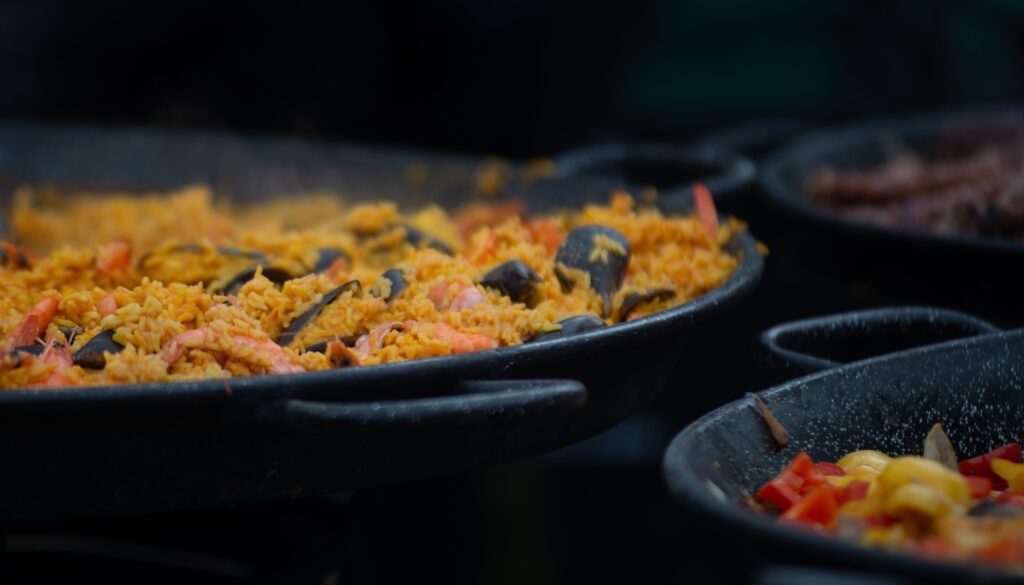
- Paella Valenciana: Spain’s most iconic rice dish. Cooked in a massive, shallow flat pan over an open wood fire, bomba rice absorbs a rich broth flavored with saffron, rosemary, rabbit, chicken, and green beans. The ultimate prize of a paella is the socarrat—the crispy, deeply caramelized layer of rice toasted perfectly at the bottom of the pan.
- Gambas al Ajillo: A stunningly simple yet highly addictive tapa consisting of plump, fresh shrimp sizzling vigorously in a clay dish filled with premium olive oil, a massive amount of sliced garlic, and dried red chili peppers.
- Tortilla de Patatas: The classic Spanish omelet. A thick, juicy cake made strictly from eggs, slowly confited potatoes, and onions, cooked beautifully so that the interior remains slightly gooey and unctuous.

6. Japan: The Zen Art of Absolute Precision and Umami Mastery
For any culinary enthusiast, traveling to Japan is akin to a spiritual pilgrimage. Japanese cuisine, known traditionally as Washoku, is built upon a profound philosophical foundation of harmony, seasonality, and deep respect for the natural ingredient. Instead of mixing multiple complex ingredients together to create an entirely new flavor, Japanese chefs dedicate their entire lives to mastering a single craft, aiming to strip away the unnecessary and extract the absolute purest essence of a single ingredient.
Japan is the undisputed global capital of umami—the deeply satisfying fifth savory taste. By utilizing natural flavor enhancers like kombu (kelp) and katsuobushi (boneless bonito flakes) to create dashi broth, Japanese cuisine achieves immense depth of flavor without relying heavily on animal fats, heavy creams, or overpowering spices. From the meticulous, decades-long training required to become a sushi master to the rustic, steaming comfort of a late-night ramen shop under train tracks, Japan treats food as an elevated art form.
- Essential Dishes to Experience:
- Sushi & Sashimi: The absolute pinnacle of seafood execution. It requires flawlessly sourced, perfectly aged raw fish sliced with surgical precision, served over warm, seasoned sushi rice that has been adjusted precisely for acidity, sweetness, and temperature.
- Tonkotsu Ramen: A deeply comforting bowl of noodles bathed in a thick, creamy, opaque broth created by boiling pork bones at a roaring roll for over 20 hours to extract all the collagen and marrow, topped with melt-in-your-mouth chashu pork belly.
- Tempura: A masterclass in frying technique. Seafood and seasonal vegetables are coated in an incredibly light, ice-cold batter and flash-fried in hot sesame oil for a few seconds, resulting in an airy, crispy, and completely non-greasy coating.

7. Turkey: The Grand Imperial Synthesis of East and West
Turkish cuisine is a spectacular, sweeping epic that bridges Europe, Asia, and the Middle East. As the historical heart of the massive Byzantine and Ottoman Empires, Istanbul was the ultimate melting pot where culinary ideas, spices, and techniques from Central Asia, the Mediterranean, the Balkans, and Arabia collided and fused into an imperial culinary style.
Turkish food is incredibly diverse, offering a flawless balance of charred meats, rich olive oil dishes, fresh vegetables, and legendary pastries. It is a culture obsessed with hospitality. A traditional Turkish breakfast (Kahvaltı) is a massive table-covering feast consisting of dozens of small plates: fresh cucumbers, sweet tomatoes, aged cheeses, olives, clotted buffalo cream (kaymak) drenched in wild honey, and warm baked breads. From the smoky barbecue culture of the southeastern regions to the delicate olive-oil braised vegetables of the Aegean coast, Turkey offers a staggering depth of culinary exploration.
- Essential Dishes to Experience:
- İskender Kebab: One of Turkey’s most beloved meat masterpieces. Thinly sliced, tender donor lamb is laid over pieces of warm, grilled pide bread, then completely drenched in a rich, warm tomato sauce, flooded with sizzling melted sheep’s butter, and served with a side of thick yogurt.
- Baklava: A legendary dessert made from dozens of paper-thin layers of buttery phyllo pastry, packed with crushed emerald-green Gaziantep pistachios, baked to crispy perfection, and doused in a sweet, fragrant sugar syrup.
- Lahmacun: Often described as Turkish pizza, this thin, ultra-crispy flatbread is topped with a finely minced, spiced mixture of lamb or beef, onions, tomatoes, and parsley, meant to be rolled up with a squeeze of fresh lemon juice.

8. China: The Eight Great Culinary Traditions and Regional Masters
To view China as having a single “Chinese cuisine” is a massive understatement. China is a vast subcontinent with an endless array of micro-climates, ethnic cultures, and historical eras, resulting in one of the most complex, diverse, and ancient food systems on earth. Chinese culinary philosophy classifies its food into the “Eight Great Traditions,” each possessing completely distinct flavor profiles, techniques, and core ingredients.
You have the fiery, numbing, and deeply complex flavors of Sichuan cuisine, which utilizes the legendary Sichuan peppercorn to create a buzzing sensation (ma-la) on the tongue. In stark contrast, Cantonese cuisine from the south focuses on subtle, delicate, and clean flavors, highlighting the absolute freshness of live seafood and steamed meats. Shandong cuisine offers rich, savory master-sauces, while Hunan food provides a bright, intense, and unadulterated vinegar-and-chili heat. The sheer variety of textures in Chinese cooking—ranging from silky and gelatinous to ultra-crispy—is a testament to their unrivaled mastery of fire, wok technique, and fermentation.
- Essential Dishes to Experience:
- Peking Duck: The royal jewel of Beijing. A whole duck is air-dried, glazed with maltose syrup, and roasted in a specialized oven until the skin becomes incredibly thin, glassy, and shattering crisp. It is carved tableside and wrapped in delicate pancakes with sweet bean sauce, cucumbers, and scallions.
- Xiaolongbao (Soup Dumplings): A marvel of culinary engineering originating from Shanghai. Delicate, thin wheat wrappers are meticulously pleated around a savory pork filling and a solid cube of gelatinized broth. When steamed, the broth melts, creating a burst of hot, rich savory soup inside the dumpling.
- Sichuan Mapo Tofu: A legendary, rust-red dish of silky soft tofu cubes and minced beef swimming in a glossy, fiery sauce made from fermented broad bean paste, chili oil, and a massive dusting of numbing Sichuan peppercorn.

9. France: The Foundation of Classical Culinary Technique and Grand Cuisine
France is the country that systematically organized, codified, and exported the foundational rules of modern global fine dining. For centuries, French cuisine has been viewed as the gold standard of prestige, sophistication, and luxury. The French culinary identity is rooted in an unwavering dedication to technique, patience, and the masterful manipulation of dairy—specifically heavy cream and massive blocks of high-quality butter.
French cooking is anchored by the concept of terroir—the belief that the specific soil, climate, and environment in which an ingredient is grown directly infuses it with a unique, unrepeatable flavor. This philosophy is rigorously protected by strict government certifications for their wines, poultry, and cheeses. French cuisine is also famous for its five “Mother Sauces” (Béchamel, Velouté, Espagnole, Tomato, and Hollandaise), which serve as the technical building blocks for thousands of dishes worldwide. From a simple, flaky baguette picked up at a neighborhood bakery to a multi-course meal in a historic Parisian bistro, France treats dining as a sacred cultural ritual.
- Essential Dishes to Experience:
- Coq au Vin: A timeless, rustic French classic consisting of chicken braised slowly for hours in a rich, full-bodied red Burgundy wine, heavily infused with lardons (thick-cut bacon), button mushrooms, pearl onions, and fresh thyme.
- Boeuf Bourguignon: A spectacular, deeply savory stew featuring tough cuts of beef marbled with fat, braised slowly in red wine and beef broth until the meat completely collapses at the touch of a fork.
- Escargots de Bourgogne: Plump land snails baked in their shells filled with a luxurious, vibrant green compound butter made from massive amounts of minced garlic, shallots, and fresh flat-leaf parsley, served with crusty bread to soak up every drop of butter.

10. Indonesia: The Vibrant Kingdom of Spice and Island Abundance
Rounding out the top ten is Indonesia, a spectacular archipelago of over 17,000 islands that boasts one of the most vibrant, intense, and deeply aromatic food cultures in existence. Indonesia is the original heart of the historic “Spice Islands,” the very destination that drove European explorers mad with desire for nutmeg, cloves, and mace.
Indonesian cuisine is a masterful symphony of complex spice pastes known as bumbu. These pastes are created by grinding fresh aromatics—such as lemongrass, galangal, turmeric, shallots, garlic, and fiery bird’s eye chilies—on a stone mortar and pestle, then frying them in oil to release an overwhelming wave of fragrance. Indonesian food masterfully layers sweet, salty, sour, spicy, and nutty components. Almost every meal is accompanied by sambal (a fierce, freshly pounded chili paste) and Kecap Manis (a thick, sweet, syrupy soy sauce), ensuring that every single bite is packed with maximum sensory impact.
- Essential Dishes to Experience:
- Rendang: Consistently voted by global food lovers as one of the single most delicious foods on earth. Beef is simmered slowly for many hours in a rich, deeply aromatic paste of coconut milk and an array of complex spices until the liquid completely evaporates, leaving the meat caramelized, intensely concentrated, and meltingly tender.
- Nasi Goreng: The ultimate Indonesian fried rice. It is distinguished from Chinese fried rice by the heavy use of Kecap Manis, which caramelizes in the hot wok, giving the rice a deep golden color and a sweet, smoky flavor, typically topped with a fried egg and crispy shallots.
- Satay (Sate Ayam): Succulent skewers of marinated chicken grilled over open hot charcoal, served with a rich, velvety, and deeply savory peanut sauce infused with lime juice and chili.
Are there any specific countries from this top 10 list that you are planning to visit soon, or a particular ingredient (like seafood, lamb, or spicy chili pastes) that you want to explore further? Let me know, and I can provide curated US-based restaurant recommendations or authentic recipes tailored to your kitchen!