The Costco Tariff Windfall: A Deep Dive into Wholesale Price Slashing and the Multi-Million Dollar Legal Battle Confronting Smart Shoppers
Introduction: The Shifting Landscape of American Grocery Budgeting
For millions of suburban households, working-class families, and small business owners distributed across the United States, managing the grocery receipt has evolved from a routine domestic chore into a highly calculated act of financial survival. The persistent, grinding macroeconomic pressures of modern inflation have substantially shifted the historical baseline costs of everyday living. From essential protein sources and morning beverages to basic paper products, the modern consumer is chronically forced to navigate an economic minefield every single time they approach a supermarket register. Consequently, the contemporary demographic of the “smart shopper” is no longer just looking for generic coupons or short-term holiday discounts; instead, they are actively hunting for structural, long-term, and institutional price relief that can genuinely restore their household’s depleted purchasing power.
In a massive, highly unexpected corporate development that is currently sending profound shockwaves through the entire global retail and wholesale sectors, Costco Wholesale has officially stepped forward to deliver exactly that type of structural relief. The membership-only warehouse giant has recently initiated sweeping, aggressive price reductions across an incredibly diverse matrix of its most highly sought-after household goods, private-label staples, and everyday culinary products. Members walking through the industrial sliding doors of warehouses nationwide are greeted not by temporary promotional banners, but by fundamentally lower baseline prices on items ranging from high-quality nuts and international coffees to dry facial towels, coarse black pepper, meats, and home furniture. While the immediate reaction from the consuming public has been one of overwhelming celebration, an analytical deep dive into this corporate decision reveals a fascinating web of international trade tariffs, multi-million dollar federal government refunds, corporate responsibility debates, and an active, high-stakes consumer class-action lawsuit that every single American shopper should be tracking with extreme interest.
1. The Macroeconomic Catalyst: Unpacking the $184 Million Federal Refund
To comprehensively evaluate why a massive multinational corporation like Costco would voluntarily slice its own top-line revenue by permanently lowering prices on high-volume merchandise, one must look past standard retail promotional strategies and analyze a highly unique macroeconomic event rooted in international trade law and federal fiscal policy. During its highly anticipated fiscal year-end financial disclosures, Costco’s executive leadership team fundamentally surprised Wall Street analysts by revealing that the corporation had successfully recovered a staggering $184 million financial windfall directly from the United States federal government.
This massive sum of capital was not generated through record-breaking membership renewals or organic retail expansion; rather, it was the direct result of a massive federal tariff refund mechanism. Specifically, the total payout returned to Costco’s corporate treasury was carefully structured into two distinct tranches: a core principal tariff repayment amounting to $174 million, and an additional $10 million in accumulated government interest accrued over the years during which the capital was tied up in federal trade disputes.
In standard corporate America, when a publicly-traded conglomerate experiences an unexpected, multi-million-dollar cash injection of this magnitude, the conventional playbook dictating executive behavior is highly predictable. Typically, corporate boards and chief financial officers will immediately channel those unbudgeted funds into direct corporate stock buybacks, aggressive dividend payouts, or general administrative reserves designed specifically to inflate quarterly earnings per share (EPS) and appease institutional Wall Street investors. However, Costco has historically cultivated a wildly distinct corporate culture that intentionally prioritizes long-term consumer goodwill and brand retention over short-term market speculation. Under the financial stewardship of Chief Financial Officer Gary Millerchip, Costco decided to execute a bold counter-strategy: they chose to bypass Wall Street entirely and reinvest the vast majority of that $184 million federal tariff refund directly back into the literal pockets of their millions of loyal members by engineering a structural, permanent lowering of price tags across their nationwide storefront network.
2. The Practical Reality on the Warehouse Floor: Real Savings Cataloged

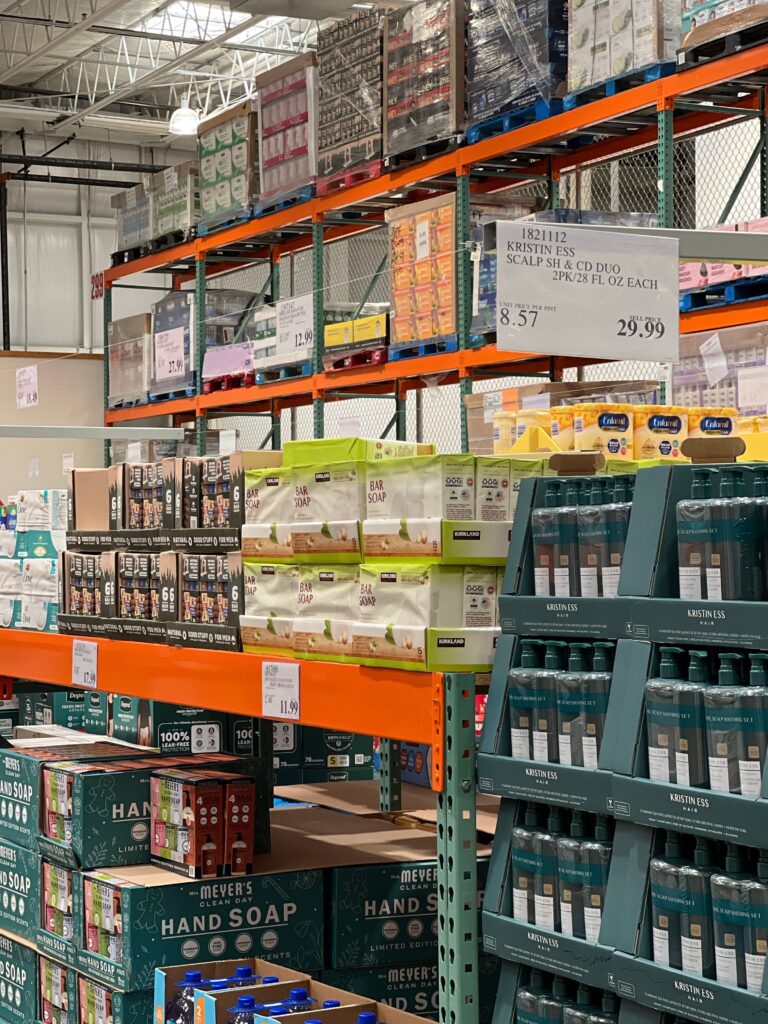
The tangible financial impact of this unprecedented corporate reinvestment strategy is already fully manifest across warehouse floors throughout the United States, offering immediate, liquid cash-flow relief to families executing their weekly shopping routines. This is not a superficial marketing gimmick where prices are lowered by a few pennies while other hidden fees are increased; rather, it represents a deep, mathematically significant reduction in the baseline cost of core grocery inventory.
An empirical examination of specific product categories reveals the sheer scale of Costco’s pricing intervention. For example, the retail price for a bulk package of Kirkland Signature Walnuts—a high-volume, healthy pantry staple heavily relied upon by health-conscious families—plummeted dramatically from its historical baseline of $13.79 down to an astonishingly low $9.99. This single adjustment represents a staggering 28% structural discount on a core nutritional product.
Furthermore, daily coffee drinkers who refuse to compromise on quality have received a substantial financial boost, as premium Colombian coffee beans have been slashed from $21.99 down to $19.99, locking in a reliable, recurring $2.00 savings on a high-frequency purchase.
Daily household utilities and culinary seasonings were also major beneficiaries of this tariff-funded price-slashing initiative. Kirkland Dry Facial Towels experienced a direct price drop from $19.99 to $18.99, while the price of bulk coarse black pepper was cut from $6.99 to $5.99, representing a highly impactful 14.3% reduction on a basic kitchen necessity. To the uninitiated observer, a one-dollar or two-dollar drop on individual items might seem modest; however, when aggregated across an entire shopping cart over a multi-month period, these precise reductions represent a massive structural containment of household grocery inflation.
What makes this development uniquely profound for the modern travel hacker, financial planner, and smart shopper is the institutional permanent nature of these price adjustments. These are not fleeting holiday sales, short-term manufacturer coupon cycles, or manipulative retail promotions designed to lure customers in for a single weekend before quietly hiking prices back up. Instead, they are permanent baseline price restructurings engineered to defend Costco’s market share against competing retail chains, reward long-term membership loyalty, and establish an absolute defense of the consumer’s wallet during an era of deep economic uncertainty.
3. The Brewing Legal Storm: The Class-Action Direct Refund Battle
Yet, behind this public display of massive corporate generosity and celebratory price slashing lies a highly volatile, deeply complex, and ongoing legal battle that smart shoppers must closely monitor. While Costco is currently receiving widespread praise from the media and general consumers for proactively spending its $184 million federal refund on storefront price rollbacks, a highly sophisticated group of corporate members has initiated a massive, high-profile consumer class-action lawsuit directly against the wholesale titan.
The fundamental legal core of this brewing courtroom drama is centered around a fascinating philosophical and financial argument regarding the true ownership of government trade refunds. The plaintiffs leading the class-action lawsuit argue with absolute clarity that when the federal government originally levied inflated international trade tariffs years ago, Costco did not absorb those massive costs into its own corporate balance sheet. Instead, the corporation passed the entire financial burden of those trade restrictions directly down to the individual consumers by raising shelf prices at the exact moment of purchase.
Therefore, the legal team representing the consumer class argues that because the individual shoppers were the ones who ultimately bore the entire financial injury of the tariffs, the resulting $184 million federal refund money fundamentally belongs directly and exclusively to the specific historical shoppers who made those past purchases. The lawsuit demands that rather than using the cash windfall as a generalized, forward-looking marketing tool to lower current prices for all members (including new members who never paid the inflated tariff prices), Costco must establish a precise, backward-looking direct financial tracing system to issue direct cash refunds or membership statement credits to the specific individuals who originally funded the tariff costs.
Costco’s defense team, conversely, maintains that utilizing the retrieved capital to aggressively depress shelf prices across the board is the most efficient, legally sound, and socially responsible method to distribute the trade benefits back to the entire membership collective. The ultimate resolution of this high-stakes class-action lawsuit could establish a massive, sweeping legal precedent for how multinational retail entities handle government trade refunds and consumer restitution moving forward, making it an absolute must-watch event for any serious student of personal finance and consumer law.
4. Strategic Implications for the Future: More Discounts on the Horizon
For the highly educated American consumer and financial strategist, analyzing this massive pricing maneuver provides the ultimate blueprint for mastering the art of smart shopping and predictive budgeting. One of the most critical revelations delivered by Costco’s Chief Financial Officer Gary Millerchip during the earnings call was the explicit disclosure that this current $184 million payout represents only approximately one-third of the total anticipated tariff refunds that Costco confidently expects to recover from the federal government over the coming fiscal periods.
This means that there is an additional massive tranche of capital—potentially upwards of $360 million—still waiting to be unlocked from federal administrative pipelines. More importantly, Costco’s corporate leadership has issued an ironclad public promise that as these future waves of federal tariff refunds are systematically deposited into their accounts, the corporate policy will remain absolutely consistent: the vast majority of those future millions will be immediately and aggressively re-channeled directly into deep product price cuts across their entire inventory.
This structural commitment provides an extraordinary financial signal for consumers managing long-term household budgets. In an era where competing retail giants are quietly utilizing shrinkflation—the deceptive practice of reducing product sizes while keeping prices identical—Costco is leveraging its unique macroeconomic situation to expand the actual purchasing power of the dollar.
By closely tracking these corporate financial movements, monitoring the progress of the active consumer class-action lawsuit, and aligning your household purchasing habits with these massive, permanent pricing shifts, you can unlock unparalleled savings on your next massive warehouse haul. Stop viewing your weekly shopping trips as a passive financial drain; start analyzing corporate cash flows like a true financial professional, and let the evolving dynamics of international trade policy directly fund your family’s personal path to long-term wealth accumulation and smart lifestyle design.