
The Unanticipated Return of the Corded Landline: Why Modern American Parents Are Rewinding the Tech Clock for Their Kids
In an era where silicon valley conglomerates ruthlessly compete for the screen time of younger demographics, a startling and counter-intuitive phenomenon is unfolding across American households. The smartphone, once considered an indispensable milestone of adolescent independence, is rapidly losing its grip on the family unit. In its place, an old relic from the late 20th century is making an aggressive, venture-backed comeback: the stationary landline telephone. Driven by alarming public health data, a rising “Screen-Free” cultural movement, and pure millennial nostalgia, companies like Tin Can Untechnologies and Pinwheelare experiencing viral growth by reinventing localized, corded voice devices. For millions of modern parents navigating a hyper-connected landscape, this is not a Luddite retreat; it is a calculated, premium defense strategy aimed at reclaiming their children’s mental health, cognitive focus, and emotional innocence.
The Smartphone Crisis: Escaping the Dopamine Loop and Algorithmic Vulnerability
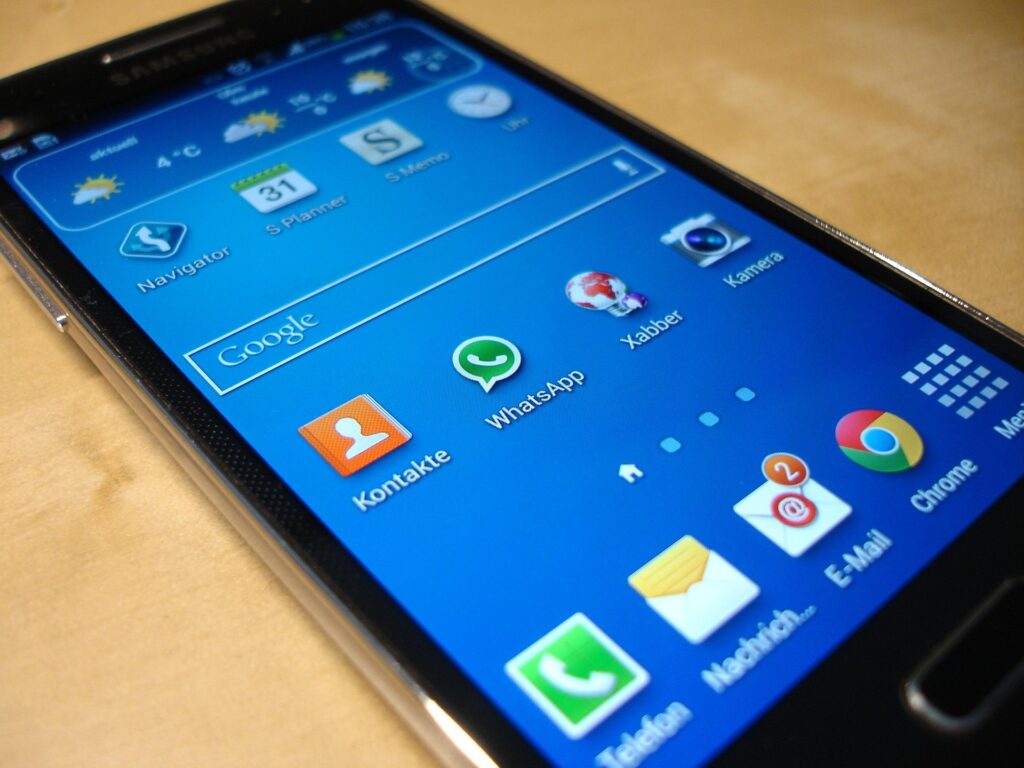
To understand the velocity of this retro-tech transition, one must examine the unprecedented crisis surrounding youth mental health in the United States. Over the past decade, the introduction of internet-enabled pocket screens to pre-teens has heavily correlated with surging metrics of clinical depression, social anxiety, and chronic sleep deprivation. Renowned public health advocates and pediatric sociologists have sounded the alarm on the “phone-based childhood,” demonstrating that unrestricted web access replaces real-world, physical play with addictive dopamine feedback loops.
When a child receives a standard smartphone, parents are rarely just handing over a device to coordinate soccer practice pickups. Instead, they are unintentionally opening a portal to predatory algorithms, metrics-driven social engineering, unvetted online spaces, and the persistent pressure of digital peer comparison. While parents inherently recognize the necessity of maintaining a direct line of communication with their offspring—especially when children are home alone or walking back from school—the entry cost of a smartphone has become prohibitively dangerous. The modern landline alternative addresses this exact pain point by severing the cord between essential voice connectivity and the toxic infrastructure of the modern mobile web.

The Rise of Kid-Tech Disruption: How Tin Can and Pinwheel Reinvented the Wire
This urgent domestic demand has paved the way for savvy hardware startups to disrupt the traditional telecommunications landscape. Foremost among them is Tin Can, a Seattle-based startup that recently secured a massive seed funding round led by major venture capitalists. Founded by tech veterans who observed their own children becoming increasingly detached through endless scrolling, the company designed The Tin Can—a physical, Wi-Fi-based home phone styled explicitly like a classic 1990s corded telephone. Retailing at an accessible price point, the device strips away the entire hazardous layer of modern communication. There are no web browsers, no app ecosystems, no text messaging suites, and absolutely no social media integration.
Instead, the device relies on a secure, cloud-backed parental companion app. Through this dashboard, parents establish a highly curated “whitelist” of approved contacts—typically restricted to immediate family members and close neighborhood friends. Random inbound telemarketing calls, spam, and unapproved external inquiries are automatically blocked before the device can even ring. Meanwhile, competitors like Pinwheel have engineered smart adapters that plug directly into standard, vintage analog telephones, transforming legacy hardware into secure, Wi-Fi-enabled calling portals controlled entirely via parental software. Crucially, both platforms maintain integrated access to emergency services, providing the fundamental safety line parents require without any accompanying digital distractions.

The Millennial Nostalgia Factor and the Reclamation of Verbal Literacy
Beyond the sterile metrics of public health and data security, the return of the landline is deeply fueled by a profound cultural longing among Millennial parents. The demographic currently raising elementary and middle-school-aged children belongs to the final generation that remembers a pre-smartphone childhood. They vividly recall the distinct, tactile rituals of the 90s domestic telephone: memorizing a best friend’s landline number, nervously speaking to a friend’s parent to ask if they were home, and pacing around the kitchen while stretching a long, coiled plastic cord to its absolute physical limits.
This retro experience was not merely a quaint memory; it was an accidental masterclass in fundamental social development. Using a communal, stationary phone required children to master verbal etiquette, practice active auditory listening, negotiate shared household resources, and cope with the minor vulnerability of vocal communication without the safety blanket of text-based editing or emoji concealment. By deliberately placing a vibrant, tactile corded phone inside their modern smart homes, Millennial parents are attempting to gift their children a piece of that grounded, analogue childhood. It is a conscious rejection of the fragmented, text-centric communication style that defines current teenage interaction, replacing it with the warmth, tone, and emotional intelligence found exclusively within the human voice.
Cognitive and Spatial Benefits: Keeping Communication Communal
Child psychologists and neurological researchers have frequently highlighted the unexpected cognitive advantages of stationary, audio-only communication tools over mobile screens. When a child engages in a video call via FaceTime or Zoom on a portable tablet, a significant portion of their neurological bandwidth is consumed by self-monitoring. They stare at their own thumbnail video, become hyper-fixated on their visual presentation, and interpret highly pixelated, fast-moving facial gestures, which often induces latent social exhaustion. Audio-only communication completely circumvents this visual anxiety, freeing the child’s brain to focus entirely on verbal processing, linguistic creativity, and authentic emotional resonance.
Furthermore, the physical, non-portable nature of a landline telephone acts as a brilliant, built-in structural boundary. Because a corded device is plugged directly into a central wall outlet within a shared domestic space—such as the living room, kitchen counter, or main hallway—it inherently prevents a child from retreating into a closed-door bedroom to isolate themselves during conversations. Communication remains an open, transparent, and communal household activity. It naturally regulates the hours during which a child can socialize, preventing the late-night blue-light exposure and secret midnight texting habits that frequently derail adolescent sleep hygiene and academic performance in traditional smartphone-equipped homes.
The Commercial Validation: From Viral Micro-Trend to Mass Movement
What started as a niche, ideological preference among tech-industry insiders looking to detoxify their own homes has rapidly scaled into a verified commercial phenomenon. Since its formal commercial launch, Tin Can Untechnologies has moved hundreds of thousands of units across the country, with demand consistently pushing their inventory into back-order statuses. The prime demographic driving this explosive sales curve sits squarely within the 5-to-13 age bracket—the exact developmental window where children actively crave peer socialization but lack the neurological maturity to govern an open internet device safely.
Recognizing this massive momentum, youth groups, sports leagues, and progressive private educational institutions have begun initiating bulk-order purchasing programs to standardize screen-free communication networks among entire friend groups. By lowering the barriers to voice-only calling—offering free device-to-device communication while gating external cellular networks behind a modest monthly subscription—these companies have successfully engineered a self-sustaining, safe digital ecosystem. It allows American children to experience the vital social autonomy they desperately crave without compromising their long-term psychological well-being or safety.


Conclusion: Reclaiming the Sacred Boundaries of the American Home
The unexpected renaissance of the landline phone inside the American home represents a sophisticated turning point in our cultural relationship with technology. It serves as a powerful reminder that true innovation does not always require relentless forward acceleration into more complex, immersive digital screens. Sometimes, meaningful progress looks like a deliberate, intentional curation of the past.
By systematically stripping away the addictive algorithms, the endless notifications, and the visual pressures of the smartphone, devices like the Tin Can are restoring the telephone to its purest, most noble form: a simple tool designed to bridge the gap between two human voices. For the modern American parent striving to raise resilient, focused, and mentally grounded children in a chaotic digital world, this old-school corded device is no longer an obsolete piece of history. It has officially become the ultimate luxury item for psychological safety and domestic peace of mind.